Friday, July 20, 2012

Southern Willamette Valley’s Oldest Winery - LaVelle Vineyards in Elmira, Oregon


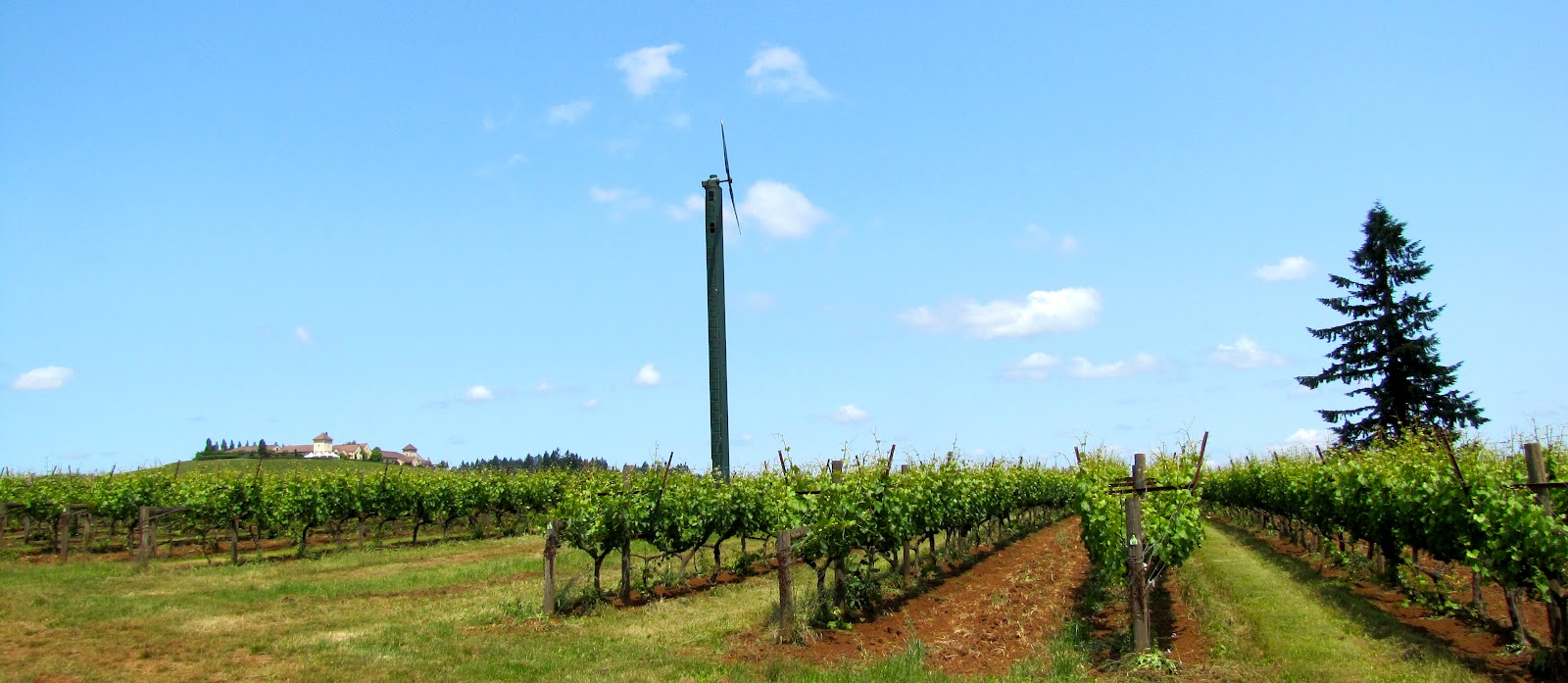
My final stop on the third day of my wine adventure was at the oldest winery in Oregon’s Southern Willamette Valley, LaVelle Vineyards. The winery is secluded at the end of a winding dusty road in the forest covered hills of Elmira, 15 miles west of Eugene. Once you make your way through the trees the tasting room and winery is half way up a steep hill just below the vineyards.


The winery was previously named Forgeron Vineyard which was founded by Lee and Linda Smith in 1972. The estate has of 16-acres of vineyard which sits on a southwestern slope approximately 300 feet above sea level on the western side of the last ridge in the coastal range near the southern end of Oregon's Willamette Valley. When the estate vineyard was originally planted it included Pinot Noir, Chardonnay, Cabernet sauvignon, Riesling, Müller-Thurgau, and Chenin Blanc. 


Two decades later, due to economic struggles the winery was closed in 1992. It was then purchased in 1994 by the current owners, Doug and Susan LaVelle. Four years later they grafted over approximately six acres of the original plantings to varietals that were more conducive with the terroir, namely Pinot Noir, Pinot Gris, and Riesling. 


While visiting I did a tour of the vineyard and taken up to the top of Demming Ridge above the vineyard and winery. From there, looking to the east, you can see Fern Ridge Lake and the floor of the Willamette Valley. You can also see beyond the foothills of the Cascade Mountains the peaks of the Three Sisters Wilderness Area.

While visiting I sampled the following wines:

The first pour was the 2011 Pinot Gris. On the nose it has aromas of fresh apples, canned pears and on the palate it is fruit forward, crisp with medium acidity followed by a medium length finish. This wine sells for $22 a bottle.

The second wine was the 2011 Riesling. On the nose this wine is grapey with notes of fresh red apples. On the palate it lacks crispness with a  medium(-) acidity. This wine also sells for $22 a bottle.


The third wine and first red wine was the 2009 Whyra Vineyard Pinot Noir, Willamette Valley Oregon. This is a BIG earthy wine with aromas of fresh black cherry that push through the earthiness followed by medium tannins and well balanced acidity, with pronounced spice and oak on the finish. This wine sells for $26 a bottle.

The final wine was the only one I found worth buying, the 2008 Matthew’s Reserve Pinot Noir. This is a major step up from the previous Pinot with notes of Black cherry, Dr. Pepper and anise with underlying earthiness and oak. On the palate it has medium (+) acidity, medium tannins, is really well balanced with a prolonged finish. I took a bottle home for $48.


To visit or for more information:

LaVelle Vineyards
89697 Sheffler Road 
Elmira, Oregon 97437
Phone: 1-541- 935-9406

You can also sample their wines at:

LaVelle Vineyards Tasting Room at the Historic 5th Street Market
296 E. 5th Street Suite #25

Wednesday, July 18, 2012

Benton Lane Winery – On the Sunnymount Ranch in Monroe, Oregon


The second stop of the third day of my adventure through the Oregon wine country was at Benton Lane Winery in the southern Willamette Valley, near the village of Monroe. The site was originally an old sheep ranch called “Sunnymount Ranch” 

Located on the west side of the valley with hillsides sloping east by southeast, it has a perfect orientation for planting Pinot Noir. Because they are east of some of the highest peaks in the coastal range they receive what climatologists refer to as the “rain shadow”. In effect, these high peaks part the marine cloud layer that flows in from the Pacific Ocean, creating a unique microclimate that receives more sunlight than the surrounding area, hence the name Sunnymount. These unique conditions provide the potential for earlier ripening of grapes which improves the ability to complete the harvest before the normal arrival of fall rains. In addition, the soils in this vineyard are deep, well drained, Bellpine and Jory clay-loam soils, which are ideal for grape cultivation. 

In 1988 Steve and Carol Girard purchased the Sunnymount Ranch and began planting Pinot Noir the following year. The name Benton-Lane is derived from the fact that the vineyard straddles the border between Benton and Lane counties. Since then the vineyard has grown to 138 acres predominantly planted to Pinot Noir with 7 distinct clones on a wide variety of rootstocks carefully matched to the planting location.

In 1992 Benton-Lane produced their first vintage was which was custom produced at another local winery. This custom production process continued until 1997 when the winery facility was constructed.

Until 2003 Benton-Lane exclusively produced Pinot Noir but then they began producing limited quantities of Pinot Gris and Pinot Blanc from small 1 and 2 acre experimental plantings of each in the Benton-Lane vineyard. These wines were then sold exclusively in the tasting room. In 2004, the winery began full-scale commercial production of Pinot Gris from grapes purchased from carefully selected Willamette Valley growers.

From time to time the winery has also produced a Rosé made from 100% estate grown Pinot Noir.  Then in 2009 the winery produced its first Chardonnay that is also only available at the winery.

While visiting I sampled the following wines:

My first wine was the 2011 Pinot Gris. This wine has medium intense aromas of honey crisp apples, melon, peaches, and lime. On the palate the wine is crisp with refreshing acidity. This wine sells for $24 a bottle.

The second pour was the 2010 Pinot Blanc. Almost Chardonnay-like, this wine exudes aromas of apples, caramel and a very distinct hazelnut character that lingers on the finish followed by toasted marshmallows on the return. It reminds of a barrel fermented Chardonnay and yet it is lighter in body and does not have the heavy oak or butter. I really liked this wine and brought two home for $18 per bottle.

The third wine was the 2009 Chardonnay. This wine displays golden raisins, hints of stone and tropical fruits followed by faint notes of butter and toasted nuts. On the palate it is medium bodied with additional notes of crème brûlée, it is silky and yet has sufficient crispness as well. This wine is competitively priced at $28 a bottle.

The fourth wine was the 2011 Pinot Noir Rosé. This wine has subtle aromas of strawberries, rose water, and spice. On the palate it is dry, medium bodied, crisp and tangy with a hint of spice on the finish. A competitively price wine at $15 a bottle.

The fifth pour was the 2009 Pinot Noir Estate. This wine has layered aromas of Bing cherries, blackberries, with underlying notes of strawberries. On the palate is lively with medium (+) acidity, soft with medium (-) tannins, and is light bodied. It doesn’t have the earthiness I have come to expect from Oregon Pinots and so it seems like a $35 Russian River Pinot Noir and yet it sells for only $26 a bottle.

The final tasting was the 2009 First Class Pinot Noir. This wine is a major step up from the previous Pinot in boldness, intensity, complexity and the “wow” factor. On the nose this wine displays pronounced aromas of blackberries, cola and a subtle floral component followed by a waft of spice, tobacco and herbs. On the palate it is really well balanced with medium tannins and abundant acidity (medium +) followed by a lengthy (medium +) finish. An absolutely fabulous wine for $48 a bottle, I brought one home.

To visit or for more information:

Benton Lane Winery
23924 Territorial Highway
Monroe, Oregon 97456
Phone: 1-541- 847-5792

Monday, July 16, 2012

Pfeiffer Vineyards –Burgundian-Style Pinot Noir in Junction City, Oregon


The previous day I tasted a Pinot Noir from made by King Estate with grapes sourced from Pfeiffer Vineyards. I was curious to see whether the distinct sharp barnyard-tar-earthiness of the wine was a result of the winemaking style or a reflection of the terroir.  So, the first stop of the third day of my adventure through the Oregon wine country was at Pfeiffer Vineyards.

While visiting guests can enjoy the very unique water garden which features small ponds with tiny arching bridges and flowing water falls surrounded by beautiful flowers and trees. Opposite of the hill side vineyard is a small lake with a surrounding forest of trees.


After taking pictures of the beautiful estate I headed into the very unique cave-like tasting room where I met the owners Robin and Danuta Pfeiffer, both of whom are extremely friendly and hospitable. When I met Danuta Pfeiffer (formerly Danuta Soderman) I recognized her as the author, newspaper columnist and former radio and television talk show host who had co-hosted the 700-Club with Pat Robertson from 1983-1988. 

Robin Pfeiffer, Danuta’s second husband, is a retired high school Spanish teacher and counselor. After working as an educator for 30 years he became a viticulturist managing the vineyard utilizing sustainable vineyard practices that bring in consistent premium grapes every year. After retiring from teaching and the media, Robin and Danuta then expanded the vineyard and built the winery to create world-class wines. Danuta also manages Villa Evenings, the winery’s wine-maker dinners given by appointment to groups of 12 or more. A word-of-mouth entertainment venue, these destination events are booked months in advance throughout the year.

The Pfeiffer family moved to Oregon in 1947, purchasing the 80 acres that currently serves as Pfeiffer Vineyards and Pfeiffer Winery. Initially, the property functioned as a sheep farm and the Pfeiffer’s children (Robin, Conrad, Eric, and Karen) assisted their parents with raising and marketing lamb, sheep, and wool. The vineyard was later planted in 1984. It has ideal climate and soil conditions for growing premium Pinot Noir with perfect elevations, aspect to the sun, latitude, soil and temperature. Utilizing sustainable agricultural practices Pfeiffer Vineyards produces very small wines that are not distributed but are sold directly to customers. 


While visiting I sampled the following wines:

The first pour was the 2008 Blue Dot Pinot Noir. The aromas of this wine have a very distinctive earthiness, somewhat tar-like up front followed by dark black cherries, oak, hint of pepper and spice. On the palate the wine is full-bodied and well rounded, with plenty of acidity and mild tannins to give it backbone. This wine sells for $60 a bottle.

The second sample was the 2007 Blue Dot Pinot Noir. This wine is very earthy, with “stinky” aromas of barnyard and a mushroomy mustiness which then dissipates into black cherry, hints of licorice, cola, medium tannins, medium (+) acidity. This is the most Burgundian Pinot I have ever tasted from Oregon. This wine sells for $60 a bottle and I brought one home to share with friends.


The next two wines were somewhat of a disappointment. Following the two superb Pinots I tasted the 2007 Merlot which displays aromas of dried fruits, very intense and concentrated notes of cherry pie filling and on the palate it is very dry, soft, medium (-) in tannin and acidity somewhat flabby. This wine sells for $30 a bottle.

The final pour was the Red Table Wine (Non-Vintage) blend of 70% Merlot and 30% Marechal Foch (pronounced “mar-esh-shall-fosh”). In general, this is just a basic non-descript soft table wine with a mix mash of red and black fruits on the nose and palate with medium(-) tannins, medium acidity and a medium length finish. However, while the wine was nothing to rave about it was a new experience as it was the first time I had ever come across Marechal Foch in a tasting room. It is an inter-specific French-American hybrid red wine grape variety named after the French marshal Ferdinand Foch (1851-1929), who played an important role in the negotiation of the armistice terms during the closing of the First World War. It was developed in Alcase France by grape hybridizer Eugene Kuhlmann and more than likely it is a cross of Goldriesling (itself an intra-specific cross of Riesling and Courtiller Musque Courtiller Musqué) with a Vitis riparia - Vitis rupestris cross. However, some contend that its pedigree is uncertain and may contain the grape variety Oberlin Noir (Oberlin 595), a Gamay-riparia cross once commercially cultivated in Burgundy. It tends to be grown in cold climates such as Canada’s Niagara Peninsula and Nova Scotia, New York’s Finger Lakes, the north Atlantic States, and in viticultural areas of the northern Midwest as it ripens early and is resistant to fungal diseases. Marechal Foch is often considered to possess Burgundian characteristics, having a vibrant, deep purple color, with a light-medium structure and dark berry fruit characteristics. With age it can have similarities to Burgundy Pinot Noir which explains why there are a few acres of it grown in Oregon’s Willamette Valley.

To visit or for more information:

Pfeiffer Vineyards
25040 Jaeg Road
Junction City, Oregon 97448
Hours: Sunday - Thursday 11 to 5 p.m.; Friday - Saturday 11 to 9 p.m.
Phone: 1-541- 998-2828

Saturday, July 14, 2012

King Estate Winery – A Pinot Noir Heaven in Eugene, Oregon


-->


On the second day of my trip to Oregon I left the Applegate Valley and headed further north on I-5 to the southern end of the Willamette Valley. I then headed southwest of Eugene Oregon to the community of Loraine. My one and only stop that day was at King Estate Winery where I toured the facility and tasted some absolutely spectacular wines. 


--> The King Estate Winery was founded by Ed King, Jr. and his son, Ed King III. The family winery has been producing wine for over two decades southwest of Eugene, Oregon. They are dedicated to certified organic and sustainable farming methods and they specialize in producing Pinot Gris and Pinot Noir as well as a small amount of Chardonnay.


-->
King Estate is the largest production winery in Oregon and is one of the most beautiful as well. The hill top winery has stunning views of the valley below as it is perched on top of a hill overlooking 1,033 acres which includes 470 acres of organic vineyards as well as 30 acres of fruits, vegetables, and flowers. The architecture of the winery and restaurant is designed in a French style but some of aspects of it remind me of the Spanish California Missions as well. King Estate provides a fascinating tour of their facilities in which you’ll walk amongst their towering stainless steel tanks and smell the “angel’s portion” of wine in the barrel room.

-->
While visiting I did a tour of the winery and then sampled the following wines:

The first wine was the 2011 Acrobat Pinot Gris. This wine has aromas of granny smith apples and lemons, on the palate it is somewhat tart with a hint of minerality with crisp and refreshing medium (+) acidity followed by a lingering medium (+) length finish. This wine is an excellent value at $12 a bottle.
-->
The second wine was the 2011 Signature Pinot Gris. This wine is similar to the Acrobat Pinot Gris in fruit profile, crispness and acidity but it is not as austere or tart and it has a rounder mouth feel with a very long finish. It is an excellent wine for only $17 a bottle.

--> -->
I then tasted a number of Rosés side by side:

-->
The first was the 2011 Luminous Pinot Gris Rosé.  This wine is light pink in color with aromas of watermelon and rose water followed on the palate with refreshing medium (+) acidity, and a lengthy finish that has a hint of spice. A beautiful wine for $21 a bottle
-->.

-->
The second was the 2011 Acrobat Rosé of Pinot Noir which is very similar to the previous wine but displays additional hints of strawberries and cranberries. Surprisingly this wine sells for only $15 a bottle.

-->
The third was the 2011 Signature Vin Gris of Pinot Noir, a Rosé wine that is slightly darker than the previous two wines, salmon pink, is more fruit forward on the nose and on the palate is seemingly off-dry, less tart and additional aromas of watermelon candy and cotton candy (without the intense sugary sweetness). Of the three Rosés this one was my favorite, it sells for $18 a bottle. 

I then sampled side by side two Pinot Noirs from the Acrobat line:

The first was the 2008 Acrobat Pinot Noir. This wine displays a classic Pinot Noir fruit profile of black cherries, subtle earthy notes followed by cola. On the palate it has medium intensity, bright acidity and a medium length finish. This wine is an absolute steal at only $20 a bottle. This is a classic vintage for Oregon Pinot Noir and you will NOT find a California Pinot with this profile in this price range. I brought three of them home.

The second as the 2010 Acrobat Pinot Noir. This wine is similar to the ’08 but with additional hints of smoke and crispy bacon. A great wine for only $20, I brought six of them home.

Following the Acrobat line, I tasted the 2007, 2009 and 2010 from the Signature series side by side. They each sell for $29 a bottle. Generally, the profile of these wines is similar to the Acrobat series except they have greater intensity of aromas, flavors and a longer finish and the 2010 has great aromas of bacon fat. So you’re paying $9 for the extra “Wow!” factor and it is well worth it! I have never found a Pinot in California of this quality at this price range. I bought three of the 2010 vintage.

My final side by side tasting was three Pinot Noirs that were the crème de la crème! These wines are a major step up in quality and price from the previous wines and are sourced from a single block of the vineyard.

The first was the 2009 Domaine Pinot Noir Block 4A. This wine was somewhat subdued at first on the nose, but given some time in the glass and a lot of swirling this is a very complex and multilayered wine that needs time in the glass to fully open. On the nose and palate it has layers of root beer, raspberry, sour cherry, and plums and the acidity, tannin and body of this palate is extremely well balanced and the flavors come together harmoniously. This wine is a bit pricey at $60 a bottle.

The second wine in the final side by side comparison was the 2009 Domaine Pinot Noir Block 4AC. This wine has subtle nuances that distinguish it from the previous, the key differences are more strawberry notes, more acidity, a slightly creamier nose and it is slightly more pronounced and focused on the mid palate. A superb wine, I brought one home for $60 a bottle.

My final wine was the 2010 Pfeiffer Pinot Noir. The grapes for this wine are sourced from Pfeiffer Vineyard (which I visited the following day). The profile of this wine is radically different from the previous, it is more earthy, almost stinky, with notes of barnyard, tar, burnt rubber tire, followed by black cherries, spice, cola, and a lot more smoke. To many, this wine may seem more Burgundian. It has medium acidity and a medium (+) length. This wine sells for $55 a bottle.

I was very impressed with the beauty, quality, value and the hospitality of King Estate Winery. The only thing I didn’t do was sample the menu in the restaurant, but I’ll be sure to do that on my next trip. So, if you are ever visiting the area, King Estate Winery is a “must visit”!

 
To see more pictures, check out Erik Wait’s Wine Country Photography at:


To visit or for more information:

King Estate Winery
80854 Territorial Highway 
Eugene, Oregon 97405
Phone: 1-541-942-9874

Thursday, July 12, 2012

Wooldridge Creek Vineyards and Winery - Grants Pass, Oregon


My third and final stop of the first day of my tour of the Applegate Wine Trail was at Wooldridge Creek Winery. While the previous wineries were located on the valley floor, Wooldridge is located on a rolling hillside overlooking the Applegate River Valley at an elevation of about 1,800 feet. 

The winery and vineyard was founded by Ted and Mary Warrick in 1978. They named it after the creek that runs through the valley, which is named after the Wooldridge family who first settled the property in the 1850s. Since then the vineyard has been expanded to 56 acres planted in twelve varieties: Cabernet Sauvignon, Merlot, Cabernet Franc, Syrah, Chardonnay, Pinot Noir, Viognier, Sangiovese, Zinfandel, Malbec, Petit Verdot and Tempranillo. The vines are densely planted at 1200 vines per acre, running north to south to allow for maximum exposure to the sun. All the vineyards are planted on Josephine soil, a soil type known for its excellent drainage.


In 2002, Ted and Mary met winemakers Greg Paneitz and Kara Olmo, who were in the area looking for an ideal place to put their winemaking skills to good use. Until then, grapes from Wooldridge Creek Vineyard had been sold almost entirely to wineries around the state, with only a small amount being made into custom wine under the Wooldridge Creek label. Once they met together they saw an opportunity to combine the Warricks’ fruit with Greg and Kara’s winemaking skills and they partnered to create Wooldridge Creek Winery.


Wooldridge Creek Winery is committed to practicing sustainable winemaking. This includes the grapes from the 200-acre vineyard which are organically grown and their wines carry the seal of LIVE (Low Input Viticulture and Enology), TerraVow, Salmon-Safe and Oregon Certified Sustainable Wine. Wooldridge Creek produces about 2,500 cases a year of wine, both varietals and blends, many of which are available only at the winery.


At the winery visitors can view the wine production area, view the barrel room in the man-made wine cave and taste the wines in the tasting room. They can also sit out on the patio or lawn that overlooks a beautiful flower garden, the vineyards and the valley below.


While visiting I sampled the following wines:

My first wine was the 2011 Viognier. This wine has very floral aromas followed by pronounced orange peels and tropical pineapple notes. On the palate it is off dry and yet maintains balanced acidity followed by a medium (+) length finish. $24

The second wine was the 2011 Rosé of Tempranillo, Applegate Valley. This wine has subtle aromas of strawberries, dried cranberries, and a hint of spice. On the palate it is fresh and vibrant with a medium (+) length finish. A really nice summer wine for $18 a bottle.

The third wine was the 2009 Syrah, which is blended with 2% Viognier. On the nose it has fresh red and black berry notes with subtle underlying floral notes. On the palate the wine is dry with intense blackberries, blueberries, medium tannins, medium acidity, and medium (+) length. This wine sells for $36 a bottle.

The final wine was the 2008 Reserve Pinot Noir. This wine has aromas of black cherries, ripe red plums, black tea and a hint of oak and spice. On the palate it is dry, with medium acidity, medium (+) length finish. This wine sells for $36 a bottle.

To visit or for more information:

Woodlrige Creek Vineyards and Winery
818 Slagle Creek Rd
Grants Pass, Oregon 97527
Phone: 1-541-846-6364